Laser Cutting and Welding for Kitchen Equipment Manufacturing
Laser cutting and laser welding help kitchen equipment manufacturers improve precision, finish quality, and production efficiency for stainless steel sinks, countertops, cabinets, panels, and structural parts.

Gaven
Nov 30, 2024Trending and helpful laser knowledge for your success.


IKitchen equipment manufacturers need reliable, efficient, and high-precision metal processing to stay competitive. From stainless steel sinks and countertops to cabinets, appliance panels, and structural parts, product quality depends heavily on cutting accuracy, welding consistency, and surface finish.
Traditional fabrication methods can make it difficult to achieve clean edges, seamless joints, and efficient production at the same time. Laser cutting and laser welding offer a more advanced solution. With higher precision, faster processing, and better visual quality, laser technology helps manufacturers improve both production performance and finished product value. This direction aligns with the current page’s emphasis on precision, speed, quality, and efficiency in kitchen equipment manufacturing.
Why Kitchen Equipment Manufacturing Needs More Precise Metal Processing
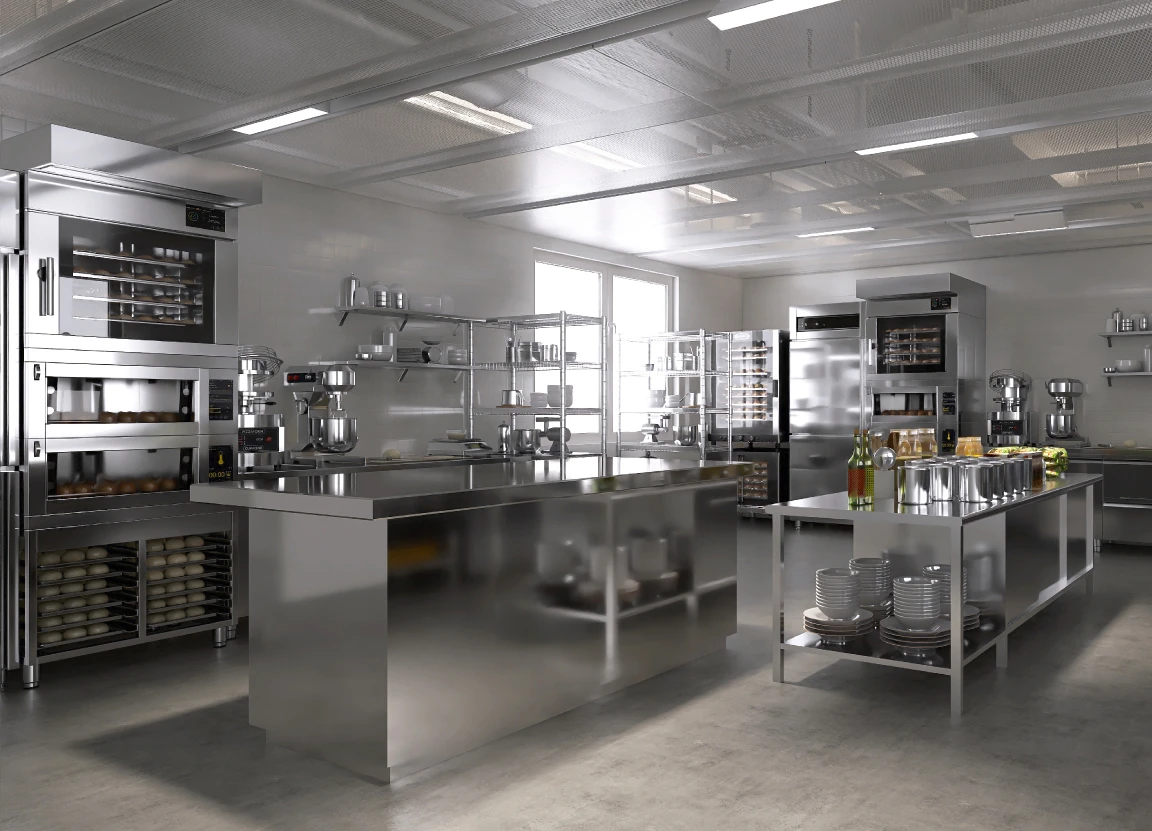
Kitchen equipment products often require a combination of structural strength, dimensional accuracy, hygiene-friendly surfaces, and visual appeal. Components such as sinks, countertops, appliance panels, cabinets, and support structures must fit correctly during assembly while also meeting appearance standards in commercial and residential applications. The current page specifically highlights kitchen equipment components like countertops, sinks, and appliance panels as relevant use cases.
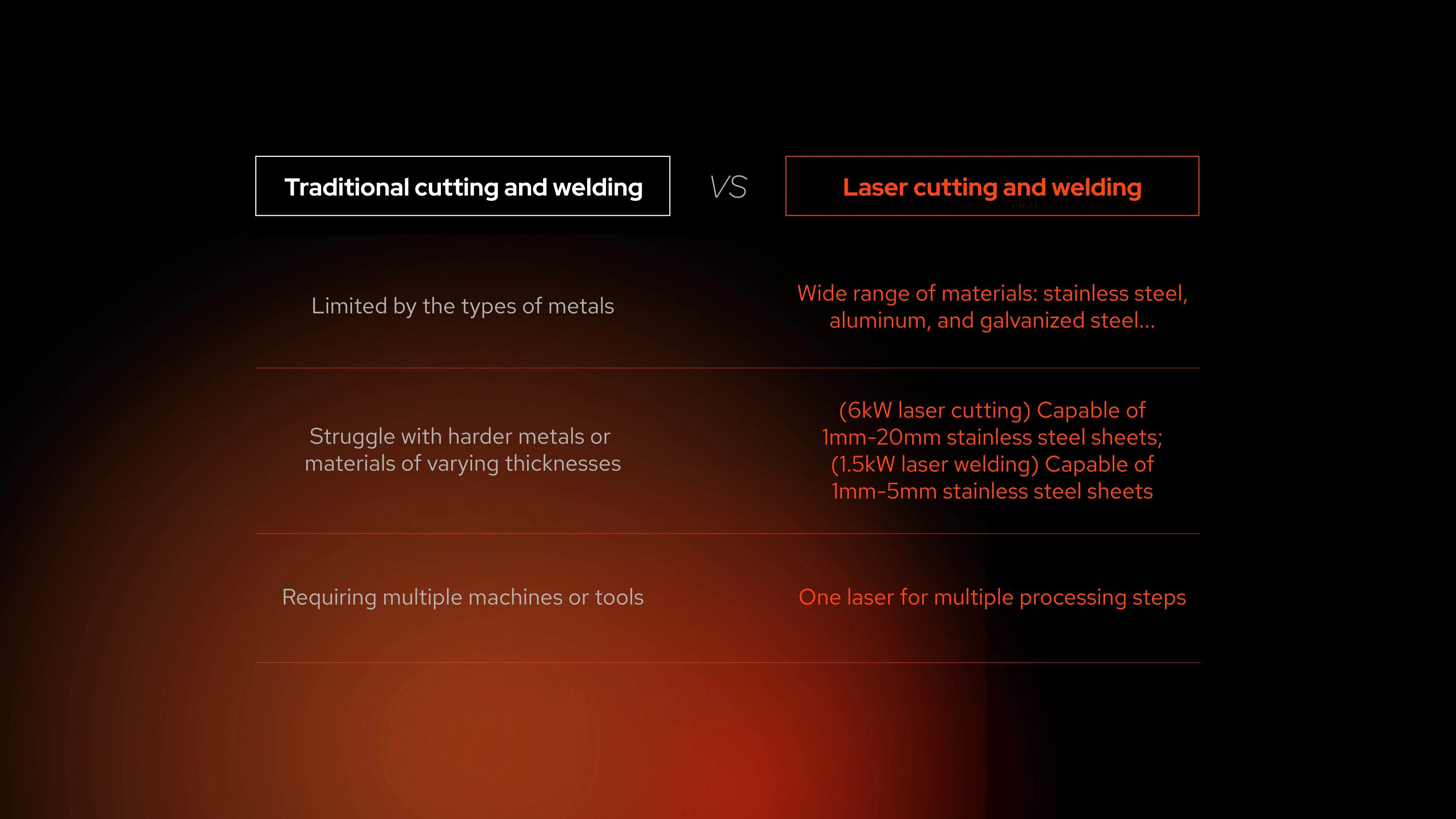
Conventional cutting methods such as shearing, punching, and sawing may struggle with intricate geometries and fine tolerances. They can also leave rough edges that require additional finishing. In welding, traditional processes may involve more visible seams, more manual adjustment, and more post-processing work to reach the desired finish. The original page explicitly contrasts laser processing with shearing, punching, sawing, and more manual conventional workflows.
For kitchen equipment manufacturers, these limitations can slow production, increase labor requirements, and affect final product consistency.
Key Benefits of Laser Cutting and Welding for Kitchen Equipment
Higher Precision for Complex Stainless Steel Parts
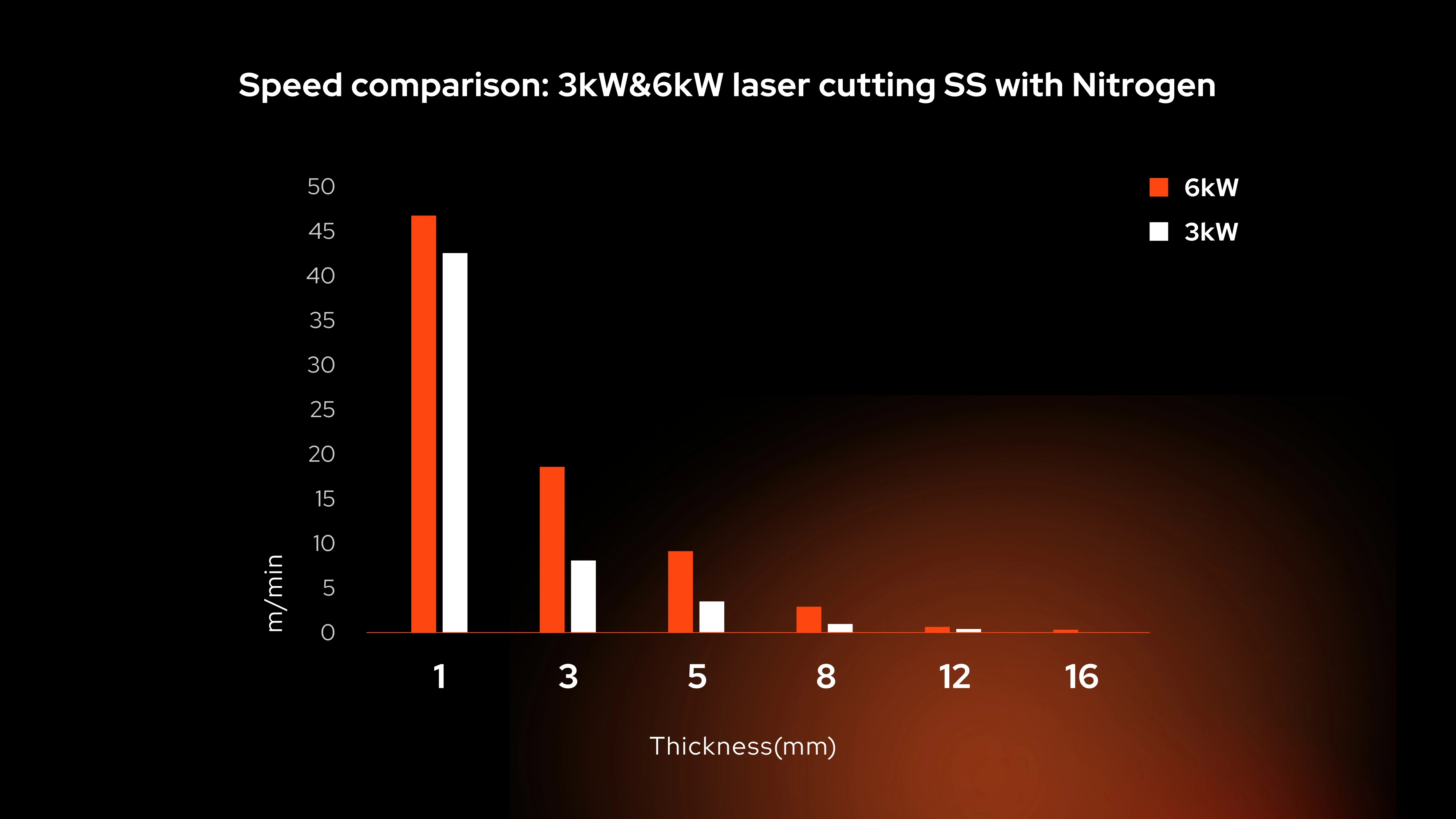
Kitchen equipment manufacturing often involves holes, contours, slots, folded structures, and custom cutouts. Laser cutting is well suited for these requirements because it can produce precise shapes with clean edge quality. The current page states that laser cutting can achieve positioning accuracy tolerances as tight as ±0.05 mm, underscoring its precision advantage for detailed parts.
This level of precision helps manufacturers improve part fit-up, reduce dimensional variation, and support more stable downstream assembly.
Cleaner Edges and Better Surface Quality
Product appearance matters in kitchen equipment, especially for visible stainless steel components. Rough cuts, burrs, and uneven finishes can increase the amount of secondary work required before polishing, welding, or final assembly.
Laser cutting produces cleaner edges and narrower kerfs, helping reduce post-processing and improve consistency. The current page repeatedly emphasizes cleaner cuts and reduced finishing work compared with traditional methods. Key Benefits of Laser Cutting and Welding for Kitchen Equipment
Higher Precision for Complex Stainless Steel Parts
Kitchen equipment manufacturing often involves holes, contours, slots, folded structures, and custom cutouts. Laser cutting is well suited for these requirements because it can produce precise shapes with clean edge quality. The current page states that laser cutting can achieve positioning accuracy tolerances as tight as ±0.05 mm, underscoring its precision advantage for detailed parts.
This level of precision helps manufacturers improve part fit-up, reduce dimensional variation, and support more stable downstream assembly.
Cleaner Edges and Better Surface Quality
Product appearance matters in kitchen equipment, especially for visible stainless steel components. Rough cuts, burrs, and uneven finishes can increase the amount of secondary work required before polishing, welding, or final assembly.
Laser cutting produces cleaner edges and narrower kerfs, helping reduce post-processing and improve consistency. The current page repeatedly emphasizes cleaner cuts and reduced finishing work compared with traditional methods.
Stronger, More Attractive Welded Joints
For kitchen equipment products, weld quality affects both durability and appearance. Laser welding can create strong joints with minimal visual disruption, making it especially suitable for visible stainless steel assemblies.
This is important for products such as sinks, countertops, panels, enclosures, and other components where a clean appearance supports product value. The original article specifically notes that laser welding is suited for durable, seamless-looking joints in countertops, sinks, and appliance panels.
Faster Production and Better Efficiency
Traditional metal processing may require multiple tools, repeated manual setup, or extra finishing steps. Laser technology simplifies many of these processes by delivering fast cutting and efficient welding with fewer interruptions.
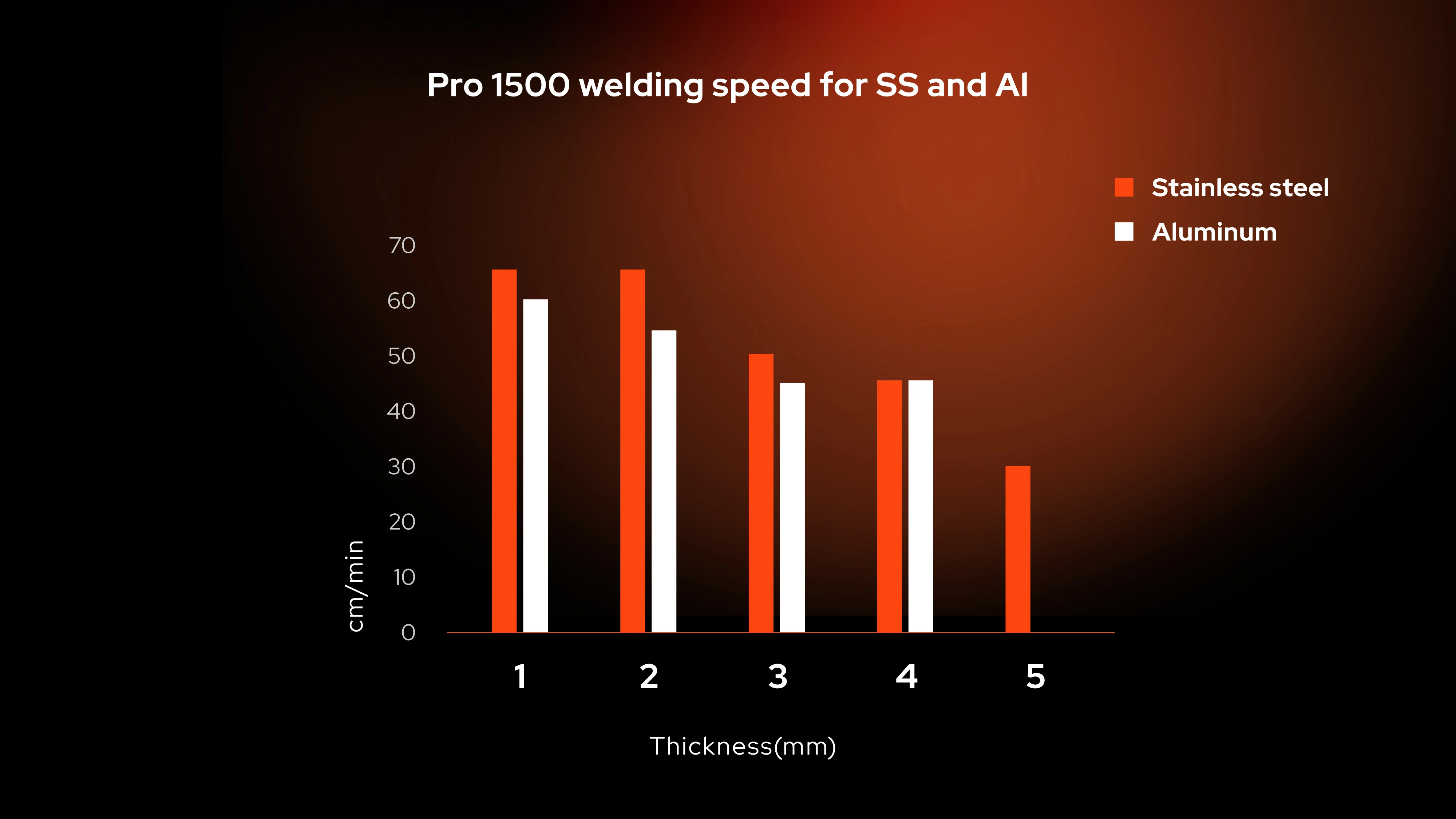
The existing page emphasizes that laser cutting can process materials quickly without tool changes and that laser welding systems such as the Pro 1500 are positioned around fast welding with minimal setup time.
For manufacturers, this means shorter lead times, improved workflow efficiency, and better production throughput.
Better Material Flexibility
Kitchen equipment manufacturers often work with multiple metal types depending on the product line and market requirements. The current page states that laser processing can handle stainless steel, aluminum, and galvanized steel, and discusses thickness ranges for stainless steel sheet and handheld laser welding applications.
This flexibility helps manufacturers manage mixed-product production more efficiently and reduce reliance on multiple specialized processes.
Common Applications in Kitchen Equipment Manufacturing
Laser cutting and laser welding can support a wide range of kitchen equipment manufacturing applications.
Stainless Steel Sinks and Basins
Sinks require accurate cutting, smooth edge quality, and neat welded joints. Laser processing helps manufacturers improve dimensional precision and reduce visible finishing defects, supporting both functionality and appearance.
Countertops and Work Surfaces
Commercial kitchen worktops and stainless steel surfaces must combine strength, hygiene, and clean visual presentation. Laser cutting supports precise shape processing, while laser welding helps create stable joints with a more refined appearance. The current page explicitly references countertops among the representative use cases for laser welding in kitchen equipment manufacturing.
Appliance Panels and Metal Enclosures
Kitchen equipment often includes panels, covers, housings, and enclosures that require accurate cutouts and good fit during assembly. Laser cutting improves edge quality and dimensional consistency for these parts. The original page specifically mentions appliance panels as a representative application.
Cabinets, Frames, and Structural Components
Many kitchen systems rely on support structures, inner frames, and stainless steel assemblies. Laser technology helps manufacturers process these parts more efficiently while supporting repeatable quality in batch production.
Why More Manufacturers Are Moving from Traditional Processing to Laser Technology
As product expectations continue to rise, manufacturers need fabrication methods that can support precision, productivity, and finish quality at the same time. Laser technology offers a practical upgrade path because it combines accurate cutting, efficient welding, and more streamlined production.
Compared with traditional fabrication methods, laser processing can help manufacturers:
improve cut and weld consistency
reduce post-processing labor
shorten production cycles
support more attractive finished products
process multiple metal materials more flexibly
prepare for more automated manufacturing workflows
The original page also frames laser technology as a replacement for older methods by emphasizing precision, speed, reduced waste, better quality, and a more sustainable production environment.
Bodor Solutions for Kitchen Equipment Manufacturing
Bodor offers laser solutions that align with the processing needs of kitchen equipment manufacturers.
Laser Cutting Systems
For manufacturers producing stainless steel panels, cut parts, and structural components, laser cutting systems support accurate processing, clean edges, and high production efficiency. The current page directly points readers to Bodor laser cutting systems as part of this manufacturing workflow.
Pro 1500 Handheld Laser Welder
The page currently references the Pro 1500 as a laser welder suitable for stainless steel and aluminum sheet applications, positioning it as a practical option for efficient, high-quality welding.
Air 1200 Handheld Laser Welder
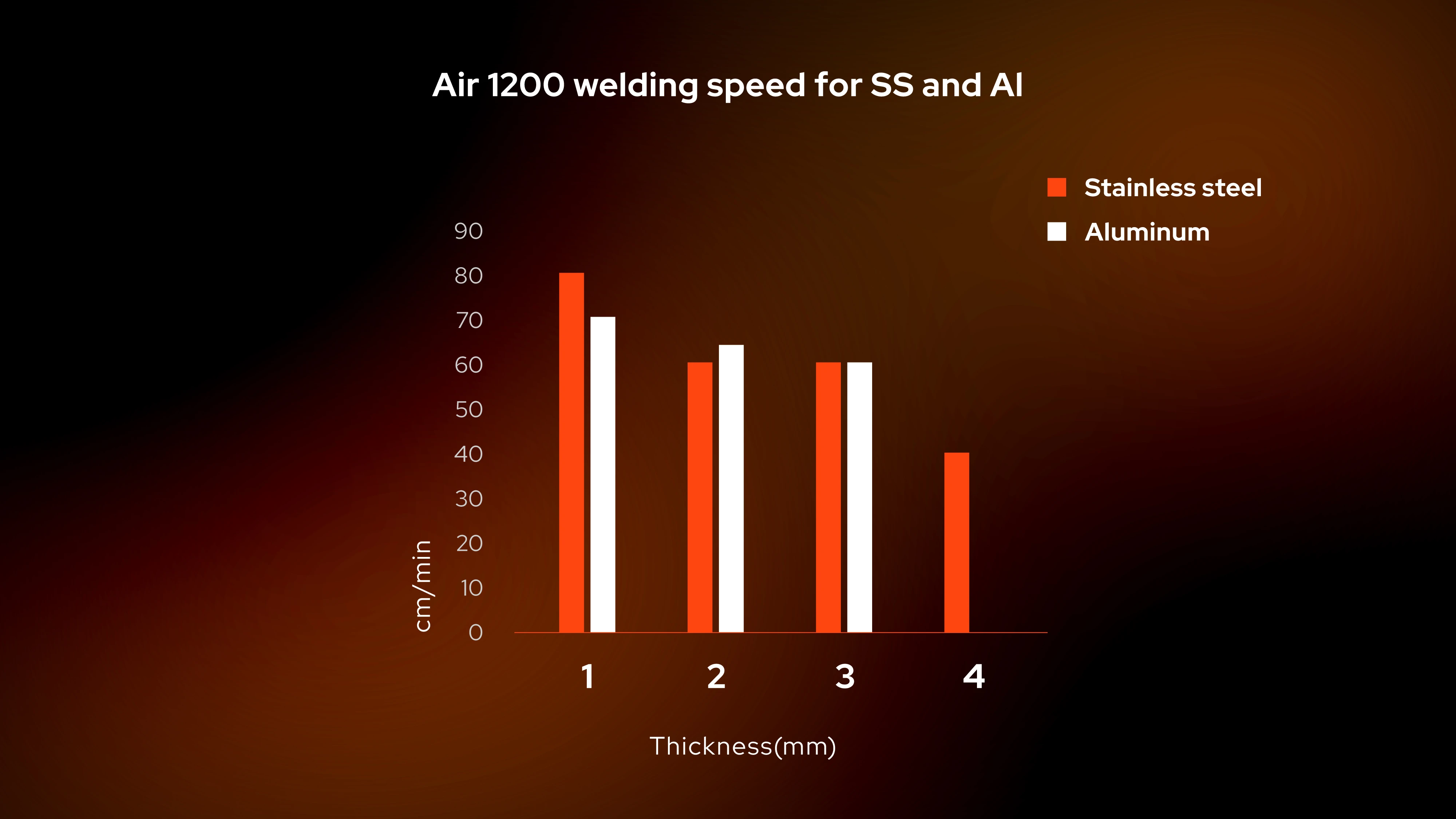
The current article also highlights the Air 1200 for stainless steel and aluminum welding applications, presenting it as another option for manufacturers seeking strong weld quality and efficient operation.
How to Choose the Right Laser Setup
The right solution depends on your production focus. Manufacturers should evaluate:
product types and part geometry
stainless steel or mixed-material processing needs
required cut quality and weld appearance
production volume
current labor intensity
goals for future efficiency improvement
A well-matched laser setup can help improve both current manufacturing performance and long-term production flexibility.
Upgrade Kitchen Equipment Manufacturing with Laser Technology
Laser cutting and laser welding are helping kitchen equipment manufacturers improve precision, speed, product quality, and production efficiency. For applications such as sinks, countertops, appliance panels, cabinets, and structural parts, laser technology offers a more advanced and scalable approach to metal fabrication. This reflects the current page’s core message that laser systems outperform traditional methods in precision, versatility, efficiency, and final quality for kitchen equipment manufacturing.
If you are looking to improve stainless steel kitchen equipment production, Bodor’s laser cutting and welding solutions can help you build a more efficient and competitive manufacturing process.
Conclusion
Laser technology is revolutionizing the manufacturing of kitchen equipment by offering unmatched precision, versatility, and efficiency. From cutting complex designs with exacting accuracy to welding strong, aesthetically pleasing joints, laser systems significantly outperform traditional methods. As the industry continues to evolve, the adoption of laser technology will be key to meeting the growing demands for high-quality, cost-effective, and sustainable production.
Whether you're exploring the capabilities of advanced laser cutting systems or looking into the benefits of handheld laser welders like the Pro 1500 and Air 1200, it's clear that laser technology is paving the way for the future of kitchen equipment manufacturing.